Designed to be highly searchable!

“How To” Categories

Sustainahillbilly:

n., Any hill dweller who knows that the best path to the future is through the arts of the past mixed with the smallest possible dose of newfangled ingenuity.

Sustainahillbilly Soul-Mates

How to Deal with Pillbugs When They Become a Problem

The key here is “when they become a problem.” In general, pillbugs, or roly polies as I grew up calling them, are quite nice little composters.

The textbook “fact” is that pillbugs prefer to eat rotting organic matter and only graduate to other foods when they can’t find enough. That’s actually false. They’re opportunistic omnivores, and they’re going to eat the most nutritious thing available. In addition to rotting vegetation, their favorite foods include tender plant growth, fine roots, soft fruits, moist tubers, and new seedlings. In small numbers you’re unlikely to notice when a pillbug has taken a nibble, but when they overpopulate it turns into a major issue.

Photo Caption: I can move just about anything in my yard and find a large nest of pillbugs.

This morning I went to water the seed trays in our straw bale cold frame and discovered many of the trays were missing plants. Some of the seedlings were teetering on nearly severed stems, but others were toppled or missing outright. People dealing with this problem are often told they are incorrect in their diagnosis. Before anyone suggests alternative culprits like cutworms or slugs, let me emphasize that I am pretty good at identifying pests and have obtained proof on countless occasions that pillbugs are in fact, whodunnit.

If you need further assurance that they aren’t always friendly denizens of the compost heap, here are other sources describing their destructive abilities:

Photo Caption: After I discovered pillbugs munching in my seed trays, I removed the critters I could find and lifted the trays to higher ground and brighter sunlight.

The problem is, a lot of the advice that people give simply isn’t accurate or effective. Popular word-of-mouth solutions aren’t necessarily based on personal experience. Additionally, gardeners are usually poor scientists. They try something and if it works, they think it fixed their problem. The reality is that it could have been brought about by other means the gardener didn’t notice.

We really need some brainstorming to solve this issue for organic and permaculture growers!

Here’s what I know for sure about pillbugs:

  1. They’re neat! As crustaceans, they’re more closely related to shrimp than insects. They breathe through gills and need moisture to survive. Also, their scientific family is Armadillidiidae, which is pretty adorable.
  2. Their favorite conditions are identical to the favorite conditions of most plants. They’re also able to burrow to find moisture and do not leave a garden entirely during brief droughts. Once irrigation occurs, they’re back. In order to completely remove them from an environment, you’d need to create a desert situation.
  3. Diatomaceous earth isn’t effective in moist conditions. Also, I have witnessed pillbugs nesting in it.
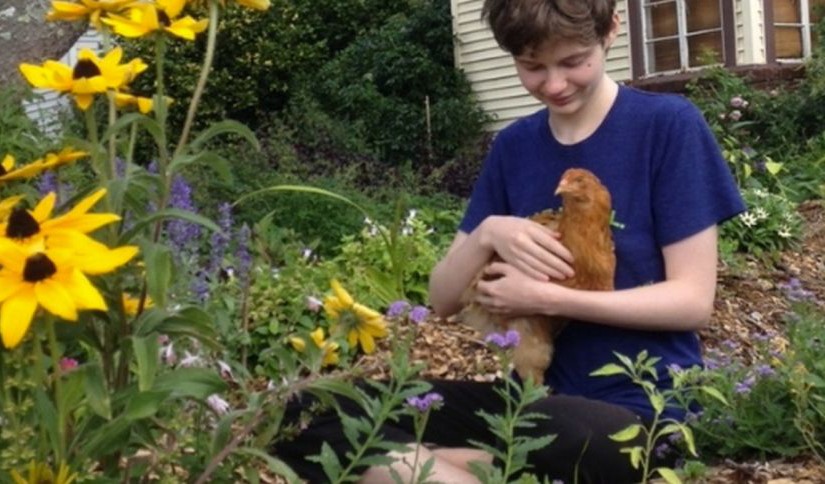
  4. Free-range chickens are only temporarily excited to eat pillbugs when they are abundant. My brown leghorns will still eat them half-heartedly, but my other two breeds turn up their beaks. In two years of owning chickens I have noticed no reduction in the pillbug population, even when the poultry fence was broken and they had months of unrestricted access to the entire yard.
  5. They seem to be active year-round in my climate.
  6. They do like mulch, but so do plants and the rest of the soil food web. Also, even when I let a seedling bed bake in the sun the pillbugs come out from nearby hiding areas at night.
  7. They don’t like bright light.
  8. They drown easily and it appears to occur evenly whether you use water or beer.
  9. They will collect in rolled up moist cardboard or upturned grapefruit rinds the same way that slugs do. They often nest just under the soil next to plants they like to consume.
  10. They seem to cause regional problems. I know of multiple farms and gardens in the upstate of South Carolina with this predicament, but have yet to find a grower in North Carolina experiencing the same issues. People who do not have this problem look at you like you’re nuts when you bring it up.
  11. There must be an environmental factor that keeps their numbers under control if there are regions of the country where they aren’t a problem. We just have to figure it out.

Photo Caption: I moved the straw mulch inside the cold frame and found pillbugs nesting in the wet spots.

One thing I would like to try, but do not currently have the means to do so, are ducks. Does anyone have experience using them for this purpose?

Regarding the infestation in my seed trays: I pulled them out of the bottom of the cold frame and balanced them on the straw bales. My reasoning is that the bright light exposure from all sides will drive the pillbugs off of the seedlings. I’m also considering water traps tucked inside the frame to cause drowning.

Consider this an open discussion. What would you do? Is there anything you’ve tried and did it work? No idea is too stupid, we could really use your help!

*Update: my husband’s first suggestion is that we eat them. Any suggestions on how to harvest them easily?* ;)

Print Friendly
Share

How to Use Our New Permaculture Library

One of the things we found when searching for permaculture materials online is that there is a lot of chaff to sift through to find the viable seeds. If you click on a “permaculture” video that shows nothing but dancing hippies or tells you to buy lots of drip irrigation and soil amendments, you’re in the wrong place.

In order to put some of the best sources in one place, we’ve created a permanent permaculture library for our website that you can access from the upper left navigation tabs (where it says “Home, About, Contact,” etc.).  Click here to view it.

Photo Caption: Learning to mimic natural ecosystems in the garden provides for less work, higher productivity, and long lasting sustainability.

Here’s a sample of two videos in our library. The first is only 5 minutes long and quite possibly the answer to all the world’s problems. We’re not just saying that:

YouTube Preview Image

The second has the beautiful production quality, footage, facts, and narration you’d expect from the BBC — accessible to any grandmother, friend, boss, neighbor, spouse, expert permaculturalist, or random stranger:

YouTube Preview Image

View the rest at the permaculture library. If you have suggestions for materials we should add, please let us know in the comments.

~Eliza

Print Friendly
Share

How to Find Permaculturalists in the Upstate

On Tuesday evening we created the brand new SC Upstate Permaculture Society. Barely three days later we already have 80 members!

Here’s the description of our group:

Free & beginners welcome! Permaculture is an agriculture/garden movement that tries to be sustainable and self-sufficient. It incorporates the home and community as well. We’re planning to have meetings where members can talk sustainable living, resource exchanges (we can trade plants, seeds, labor, and other materials), activism events, site tours, potlucks, and more. Suggestions are welcome!

Again, just click here and request to join.

Photo Caption: A hugelkultur keyhole bed we put in this week. Our front yard is getting a makeover, expect a post with extensive before and after pictures soon!

Everyone is welcome to attend our upcoming planning meeting on May 5th, which happens to be International Permaculture Day. The location and time is still TBA. Note that you may not be able to see the planning meeting link until you’ve joined the permaculture group.

For the few of you who still don’t use Facebook, we plan to post a separate calendar of events on our website and we’ll be setting a regular day of the month to meet. We’ll also list additional events like site tours, swaps, classes, or shared labor days (as an example of shared labor, people might get together to build a cob oven at someone’s house).

Photo Caption: Zev Friedman talking plant guilds at the Organic Growers School this past March. His Friday full-day Forest Gardening workshop was outstanding.

We also want to make sure you hear about the free permaculture talk tomorrow morning, May 6th, 9:30am, at Furman University. Zev Friedman is an engaging speaker and you can’t beat the price! He works with Chuck Marsh at Living Systems Design in Asheville, NC. Click here for additional details about this event. There is an optional potluck after the lecture.

What else? Nathaniel and I are currently enrolled in a course to get our PDCs (Permaculture Design Course/Certificate). We’re very excited! More on that later…

So much good green stuff in the upstate!

~Eliza

Print Friendly
Share

How to View More Photos of Appalachian Feet’s Adventures in Sustainahillbillery

Eliza makes a conscious effort to illustrate her blog topics with at least one photograph and I, in turn, am trying to uphold that goal. Why? Because we all love eye candy (plus many of us are visual learners).

Photo Caption: On our Facebook page we often share photos that we don’t plan to write full blog posts about, like this blond morel Eliza found on Tuesday.

While neither Eliza nor I have had much in the way of professional photography training we both greatly enjoy documenting the world.  However, only a handful of these photos will make it into the blog posts we write.

Photo Caption: I’ll be posting harvest photos all season long!

We would like all of you to have a chance to look at some of these non-blogged pictures, and so, I have begun our Facebook photo albums.  I think the social media giant handles photo sharing pretty well, though I find that generally speaking, I am often critical or questioning of their practices.

Therefore, please feel free to check out our photo albums by clicking this link.

Bicolored Boletes

Photo Caption: A large bicolored bolete, found on my birthday last year. I love photographing all fungal finds so I’ll share some of the best ones in our photo albums. (Note: I often photograph mushrooms in hand to provide a sense of the fungi fruiting body’s size)

Also note that I have only just started adding pictures and the albums are apt to be a bit sparse at first. You may want to “like” our page so you’re alerted to new content.

Enjoy!

~Nathaniel

Print Friendly
Share

How to Value “Free” in Sustainable Lifestyle

This past weekend the weather in our little corner of South Carolina got quite pleasant, reaching up into the mid 70s and all around feeling very spring-ish. It was great. The whole greater Greenville area seemed to decide that with such delightful weather at hand, it was only appropriate to spend some time out of doors. By the end of Saturday, piles of neighborly yard waste could be found lining our street. On Sunday afternoon I took our truck and picked up a ton of that yard waste.

it only took me about half-an-hour to fill the back of our truck up with wood yard waste that people had piled up on the street for pickup.  Most of this will in turn be buried in our yard as part of our hugelkultur efforts.

Photo Caption: It only took me about half an hour to fill up the back of our truck with wood that people had piled on the street for pickup. Most of this will in turn be buried in our yard as part of our hugelkultur efforts.

To some, yard waste is just that, “waste.”  It is matter and material that is no longer desirable.  To me, all of that organic matter is ideal material for hugelkultur and composting.  Furthermore, as the discards of others’ labors, it was all free.

In our current lifestyle we have found many items and materials that have cost us nothing more than a bit of labor to move it from point A to point B (time is money, sure, but for the projects we like to work on, it doesn’t seem like much).  We often arrange to pick-up (or even better, receive a delivery) of leaf and wood mulch. Last weekend, in  addition to the straw bales we bought, we gathered up drifts of loose straw that were just going to be tossed (and probably got another two or three bales worth from it). The windows on our cold frame came from a friend. Our chicken coop is repurposed from things like an old laundry room cabinet and leftover house siding. We both regularly collect empty cardboard boxes to use for sheet mulching.  It does not take a lot to find the “free” things in this world that can be used for other tasks.

Cardboard

Photo Caption: Cardboard is almost always in abundance, as so much is shipped in boxes made from it.  I get cardboard from work, from the local beer and wine store down the street, and from friends.

The idea of “free” can even extend to items that you may have paid for in the first place.  We regularly keep large glass jars from things like pickles or olives to be reused in other ways (like for the kimchi I made this weekend).  While the cost of the packaging might be included in the initial purchase, more often than not the packaging is discarded once the contents are gone (this is very often the case with cardboard, too).  Our friend Jim dropped off four five-gallon food grade pickle buckets the other day, which I intend to turn into sub-irrigating planters. It is an interesting comment about our consumerist society that we deem so many usable materials as waste.  In fact, at times, we even regulate the trait of “thriftiness” as a negative, when in reality it should be seen as being conscious of available resources.

Photo caption: These piles of straw, wood, and wood mulch, were all "free" in that we did not personally spend money on them.  We'll use them for a variety of things, like mulching beds, building boarders, and filling parts of our chicken run.

Photo caption: These piles of straw, wood, and wood mulch, were all “free” in that we did not personally spend money on them. We’ll use them for a variety of things like mulching beds, building borders, and filling parts of our chicken run.

Free can be found outside of the manufactured human realm too.  When I go mushroom foraging or gather up a bunch of fallen black walnuts, once again, I am not paying anything besides a bit of my personal time (and as these activities are ones I really enjoy, I don’t usually notice the cost).  I think that we often forget that, at one time, this was a major method of human survival — gathering that which nature simply made available.

But what else?  I remember, growing up, getting so tired of rain all summer long (Vermont has very cloudy and wet summers in general), but now, as a grower, I greatly look forward to rain because that is a free irrigation day for my plants.  In younger days I would have scoffed at something like chicken poop, but now, I value it as free fertilizer.  Even the dirt in the yard is a resource; while the property is paid for, so many of us overlook the very soil we supposedly “own” when tending it a bit more can provide free services like a lower-maintenance healthy garden.

Photo Caption: Family members gave us the used laundry room cabinet, excess house siding, roofing, and a good bit of the lumber on our chicken coop.

A big part of sustainability is working to transcend some of the blind consumerist mindset — the drive to always acquire more, use more, own more.  At its heart, sustainability is using things to the extent of their worth, and, when their immediate usefulness has finally passed, finding ways to inter their remains with respect so they continue in the world’s cycle rather than just becoming “waste.”  I like to think of a healthy forest when I think of sustainability.  The forest doesn’t think of things in terms of waste, it simply reincorporates all the pieces that pass through.  Plus, in that sustainable cycle the concept of “free” or “not free” becomes kind of redundant, because where was the ownership in the first place?

So here’s a challenge we can all try to do a bit each week. What things in our lives have we each taken for granted as being “waste” and how can we rethink them into “free” things that can be used in other ways?  I think, when we put our mind to it, we almost always come up with a solution.

~Nathaniel

Print Friendly
Share

How to Make Venison Sausage and Kale Quiche with a Side of Lemon-Ginger Beet Salad

While I think that there is a wide variety of reasons why we garden, arguably the biggest one is to have fresh homegrown food. I really enjoy cooking, and the appeal of growing my own quality ingredients was what got me started on the path to being a gardener.

We didn’t keep a garden this winter so our own ingredients have been a bit sparse. However, our chickens have been actively laying eggs, we’ve still got onions and herbs growing throughout the yard, and, a few months back, we came into possession of a lot of locally hunted venison.  So, when we invited some friends over for dinner last night, a quiche seemed well in order.

Quiches have, over the past few years, become one of our staple go-to meals for a number of reasons.  First of all, they are relatively easy… especially if you choose to do a crust-less quiche, which is the route we normally take (crust-less quiche is exactly what it sounds like, all the filling, none of the crust).  Secondly, quiches tend to be blank pages which you can fill in with whatever meets your fancy. Oh, you’ve got some feta and tomatoes?  Those can go in a quiche!  Country  ham and asparagus?  Quiche time, folks!  Tons of wild mushrooms?  I know a quiche that would like to be friends with those.  Point is, quiches can provide for nearly endless variation.  Finally, a quiche is a great way to use a lot of eggs at once, and with our four chickens happily laying away, we’re pretty constantly in need of ways to use eggs.

As a cook, I advocate a laid back and relaxed culinary approach.  Basically, cook what you like and are comfortable with, but don’t be afraid to experiment a bit here and there.  Personally, I tend to use recipes more as rough guidelines to get some ideas as opposed to set rules (and I have been told this is why I struggle more with baking).  As such, the following two recipes are intended and presented — mostly — as said “rough guidelines” and I strongly encourage people to adjust and change as they will (and then share here, so that we can get more ideas ourselves).

As mentioned above, our winter garden is a bit skimpy and we found some of the ingredients from other local sources.

Venison Sausage and Kale Quiche

Ingredients

Quiche Ingredients

Photo Caption: The eggs, onions, and herbs were from us. The venison was locally hunted. The Kale was local. While the potatoes and mushrooms were from the supermarket. The cheddar is Cabot (from my Vermont home) and the milk was from Happy Cow Creamery.

  • Eight fresh eggs
  • About 1.5 cups milk (you could, if you want, substitute a half cup of half-and-half to make a creamier and richer quiche)
  • 8 ounces cheddar cheese, grated (we prefer the sharpest of the sharp cheddar, but any kind will work)
  • 4 or 5 medium-sized potatoes, peeled and grated
  • About 1/2 lb (or a little more) venison sausage
  • 2 or 3 large kale leaves, roughly chopped into small pieces
  • 4 or 5 button or baby bella mushrooms, sliced
  • 1 small onion (and greens if available) finely chopped
  • 2 cloves garlic, finely chopped
  • 1 sprig rosemary, pulled off stem and finely chopped
  • 2 sprigs thyme, pulled off stems and finely chopped
  • 3 or 4 small sage leaves, finely chopped
  • Salt & pepper to taste
  • Bacon fat, butter, or other oils (for greasing pan, and cooking sausage)

Directions

Preheat the oven to 350° and grease an 8″ pie pan with a bit of butter.  Peel and grate potatoes.  Form a rough bottom crust in the pie pan with the grated potatoes (so, essentially this is not a “crust-less” quiche, but it is also not a traditional dough crust, either).  Place the pan with potato crust in the oven for 15 to 20 minutes, or until the potatoes are starting to get lightly golden-brown.  This precooking will assure that the potatoes are entirely cooked.

Potato Crust

The layer of potatoes does not have to be very thick, just enough to provide a base on the bottom of the quiche.

In a skillet, melt a little bacon fat (or other oil) to brown the sausage in.  Venison is a very lean red meat, and without some added fat source, it can easily become dried out.  We tend to keep bacon drippings in the freezer for cooking things like venison.  Not only does it assure that the meat won’t dry out, but it also gives it an extra blast of flavor.  Once the venison sausage begins to  brown, add in the onions, garlic, mushrooms, and kale.  Lower the heat and let the vegetables get a bit wilted, but avoid over-cooking, as they will be cooked further in the quiche.

Sausage and Kale Filling

The sausage should be mostly cooked to done, but the vegetables can just get a bit of wilting heat — the rest of the cooking will happen in the quiche.

In a bowl stir together the eggs, milk, herbs, and onion greens if you have them.  Add in about 3/4th of the grated cheese, beating quickly until it is well integrated with the liquid.

Prior to cooking

You want to be careful with how full you get you pie pan with a quiche. The eggs and milk will rise and if it is too full it can overflow.

Once the potato crust is ready, spoon the meat and vegetable filling directly into it.  Pour the eggs on top the filling, and use a fork to carefully mix everything down into the filling.  Atop the eggs and and filling place the remainder of the cheese.  Return the pan to the oven and bake for about 30 minutes (maybe a little more or less).  Quiche should be ready when the top has puffed up, turned a rich golden-brown, and when a butter knife, put into the quiche, comes out relatively dry.  Serve hot.

All told, counting vegetable prep this whole recipe will probably only take about an hour or a little longer (depending on how well one can multitask some of it).  It was plenty to feed five of us last night.

Finished and Sliced

It didn’t take us very long to get into this quiche once it came out of the oven. Quiche is definitely best served hot.

This quiche came out lovely.  I told Eliza that, personally, I think this was the best quiche I’ve ever cooked.  The timing was just right, and the pairing of flavors created an exceptionally well-balanced meal.  Really, I’m hard pressed to think of anything I’d want to change on this one (maybe using porcini or another type of edible wild bolete, instead of button mushrooms, but this is certainly not a necessity).

While a quiche can be an adequate and filling meal on its own, because we had guests over for dinner last night we wanted to have a little something to go along with it.  Recently, I’ve made a beet and carrot salad a few times that is very easy and delicious.  This is beet and carrot season in South Carolina and so this quick recipe is also an easy way to use two widely available ingredients.

Lemon-Ginger Beet Salad

Only the beets in this salad were local.  Hopefully soon we'll have some of our own beets and carrots to use.

Only the beets in this salad were local. We hope that  soon we’ll have some of our own beets and carrots to use.

Ingredients

  • 3 or 4 large beet roots, peeled and either chopped into small pieces or grated (I prefer grated, simply because I think it looks nicer)
  • 2 medium to large carrots, peeled and  either chopped into small pieces or grated
  • 1 lemon
  • Ginger root
  • Salt & Pepper to flavor
  • 1 or 2 tbls. olive oil (this is not a necessary ingredient, but, the oil can help cut the acidity of the beets from their oxalic acid.  Another solution, is to just quickly parboil the beets, but I tend to prefer the crisp rawness)

Directions

In a bowl combine beets and carrots.  Zest lemon peel and squeeze in lemon juice.  Grate in a small amount of ginger (note: freeze your ginger root.  This makes it really easy to grate, and also makes it keep much longer). Add in the oil, salt, and pepper and stir together.  Serve at room temperature or slightly chilled.

Honestly, the most time consuming part of this beet salad is processing the beets and carrots, and, if you have a food processor with a grating blade, you can cut your time on that down to only a few seconds. All around, this salad can be made in ten minutes easily.  The mix of the ginger heat, citrus sour, and beet earthiness is lovely.  Paired up with the rich protein and dairy flavors of the above quiche and you’ve got a great balancing dish.  Additionally, I’d recommend pairing both of these with a dark beer or a rich red wine.

As our crops in the garden start to come in this spring I’ll probably be writing some more cooking posts.  Cooking is up there on my list of favorite things to do, so I hope I can share some more good foodstuffs to make with your garden harvests.

Until then.

~Nathaniel

Print Friendly
Share

How to Help Bats in SC… We Hope

In 2011, I wrote about White Nose Syndrome, and what people can do to help. We knew then it was only a matter of time before the deadly bat disease turned up in South Carolina.

On March 11th, 2013, DNR reported that Table Rock State Park near Pickens is the location of South Carolina’s first confirmed WNS case. We feel so heartbroken that summer evenings may become bat free in the near future.

Photo Caption: Here I am holding a northern long-eared bat (Myotis septentrionalis) during a bat trapping study. Around that time, the science group I participated with found big brown bats (Eptesicus fuscus), little brown bats (Myotis lucifugus), tri-color bats (Perimyotis subflavus), eastern red bats (Lasiurus borealis), Mexican free-tailed bats (Tadarida brasiliensis) and northern long-eared bats (Myotis septentrionalis) in Greenville, SC’s Paris Mountain State Park. At least 4 of those species may succumb to White Nose Syndrome and disappear from the area.

We’re still hoping scientists will come up with a way to restore the bat population, but it isn’t looking good.

~Eliza

Print Friendly
Share

How to Find a New Place For a Cold Frame (and Improve Upon Last Year’s Design)

Hi, I’m Nathaniel, and I will be occasionally writing here now (I believe my lovely wife was kind enough to introduce me).  So anyway, nice to meet everybody. I hope you all find what I write about interesting and valuable.

Photo Caption: Me on a trip to Vermont – where I am from – last summer.

In an effort to get our seed trays out of the house earlier last year, Eliza and I decided to make a cheap and easy cold frame out of straw bales and used windows.  You can read all about it in this previous post.  Last year’s cold frame was a huge success.  Not only did it mean we didn’t have to worry about tripping over seed trays or having our cats eat all our seedlings, but it also got our young plants out in the sun and fresh air, with ample protection from the occasionally chill nights of March/April.  Needless to say we were hooked and all about having a cold frame again this year.  However, in the time frame from last year to this year, complications of placement had arisen.

Late last summer (or early autumn) we had come into possession of a massive pile of felled maple wood.  After several months of “curing” we finally got the wood split and chopped to manageable and movable sizes (originally many of the logs easily weighed 100 lbs a piece, and were very burdensome to move).  With all the split logs, we needed a place to store the abundance of wood.  It just so happened that the spot where the cold frame sat last year was an ideal location for storing a pile of split wood.  So, we removed the decayed remains of last year’s cold frame (after being in the elements constantly, the straw bales were well on the way to becoming lovely compost) and then stacked our wood pile in its former spot.  Great, but now we didn’t have a cold frame spot.

2012 Cold Frame

Photo Caption: Last year’s cold frame was built at the end of our shed. This photo we took went viral on Pinterest.

Fast forward to this past weekend. With the combination of having attended the 2013 Organic Growers School in Asheville on Saturday (thus getting all excited about the growing season), a stack of seed trays with early seedlings demanding space and sunlight in our bathroom, and the extra evening light provided by switching to Daylight Savings time, Sunday seemed like a day for building this year’s cold frame.  The question was “where?” While our yard is not remotely small for an urban setting, we’ve intentionally maximized the use of most of the available space.  While cold frames do not have to be gigantic, with all our seed trays we knew we’d need at least 30 square feet of space (and really, considering the size of the used windows, this would have to be a 3′-by-10′ rectangle – or slightly larger).  With this in mind we set out into the yard to examine the options.

For a cold frame to work well we needed to locate it where it was going to get a fair amount of sun throughout the day (nothing is going to grow too well in heavy shade). The north face of our yard was immediately ruled out because it is both shaded by the house and a number of large trees (not to mention that much of it is chicken run territory, and knowing the love our chickens have at scratching it seemed likely that a straw bale structure would be short lived in their domain).  The remainder of the back yard was almost all raised beds for growing in.  We didn’t want to compromise this layout, as we had already determined we wanted to use the full garden area.  This left the south side of the house, leading to the driveway (same side of the yard that last year’s cold frame had been built on).  This spot was ideal for sunlight purposes, but, with a pile of split wood, two large pomegranate trees, a row of raspberries and blackberries, and a driveway (currently partially occupied by pile of wood chip mulch), this would be a tight fit.

Straw bales and wood piles

Photo Caption: With a large stack of wood there now, last year’s location was no longer available for cold frame space.

Oh, but hey, what luck we had, for those pomegranates looked mighty ready to have a good pruning and there was plenty of space right below the branches that needed to go.  Here’s to killing two birds with one stone.  The spiky pomegranate branches would be out of our way, and our seedlings would have a good space for a protective cold frame.  Victory!

As far as design went, our new cold frame is almost identical to last year’s. We only made a couple major improvements by sheet mulching underneath it and making sure that torrents of rain couldn’t pour through the window cracks to displace the seedlings from their pots.

To sheet mulch, we spread a layer of flattened cardboard boxes underneath the structure. Inside the cold frame we put about an eight inch layer of extra straw as ground mulch/insulation.  Both of these adjustments were done because last year we had weeds growing up through the base as the season went on. For the rain problem we just spaced the trays so that no seedling was directly underneath the cracks. That way the rain won’t land directly on them and splash the soil out of the tray.

So now we have a new cold frame.  While we did have to buy some new straw bales, that was a small cost.  Free items that went into the assembly include the cardboard (from broken down boxes I took from work), the windows (which a friend had given us last year), and a bunch of extra straw (which was laying all over the place when we bought our bales, so we asked if we could have it.  Obviously the answer was “yes”).  Within reason, a wood-framed version would probably be less expensive in the long run in that it would primarily be a one-time expense. However, it would be less movable if we needed to rearrange the space (not impossible, mind you, just not as easy). Also, we kind of like all the carbon matter we can salvage from these straw bale cold frames at the end of the season.

…Oh yeah, the wooden frames also require a bit more construction savvy, which, as mentioned in last year’s post, neither of us are particularly up on (but which we’re hoping to improve.  More on that when it comes about).

So now our seedlings have a good protected home while they begin their life and we have another nice cold frame for the year.  It makes our yard look a little different than last year, but in a good way.  If there is one thing I feel I’ve learned about urban gardening/homesteading, it’s that there is a constant mode of experimentation and improvement.  If things change from year to year, that is a good thing, because it means we’re trying new things.  So, 2013 cold frame, here’s to you being our “new thing” this week.

Now, some photos from the construction process:

Cardboard

Photo Caption: We laid out a bunch of overlapping cardboard first. We did not bother to dampen this cardboard before putting the cold frame atop it, but you can if you want it to stay in place better.

Measuring the cold frame width

Photo Caption: We needed to make sure that the cold frame would be both wide enough for the seed trays to fit inside it, but not so wide that the windows couldn’t sit on top of it.

Building the cold frame

Photo Caption: We placed the bales down the length of the cardboard, checking the spacing as we went along.

Straw mulch layer

Photo Caption: We placed about eight inches worth of straw mulch on the floor of the cold frame. This will serve both to prevent any weeds breaking through, as well as adding a bit of extra insulation.

Filled cold frame

Photo Caption: Seed trays and a few transplants take up residency in the cold frame space.

Blue watering can.

Photo Caption: We gave all our seedlings a good drink for the night. Honestly, I’m just including this photo because I like how blue our new watering can looks in it.

Finished cold frame

Photo Caption: With the windows on it, the cold frame is ready for its intended purpose.

~Nathaniel

Print Friendly
Share

How to Meet the Newest Appalachian Feet Writer

Hey everyone, Appalachian Feet is getting an additional writer!

From now on, some of the posts will be by me, and some will be by my husband, Nathaniel.

Photo Caption:

Photo Caption: Nathaniel being very enthusiastic about radishes and turnips.

I don’t know what he’ll be writing about… my guess is lots more urban homesteading/permaculture topics with an extra focus on cooking, mushrooms, soil building, backyard chickens, and fermented things.

~Eliza

Print Friendly
Share

How to Identify Pests and Control them Naturally with Beneficial Bugs, Trap Crops, and More

Consider this article “Sustainable Pest Control 101.” Once you’ve read this, you’ll be an expert at dealing with insects on the farm or in the garden.

Photo Caption: Zinnias at the end of a food bed to help attract predatory insects.

One of the classes I taught at Saturday’s SC Organic Growers Conference was Insect Garden Ecology. This is a topic that overwhelms growers everywhere… people often tell me they just aren’t good at remembering all the bugs that visit their garden or how to deal with them.

To which I say “who is?” I’ve talked to entomologists that can tell you the detailed taxonomy of a micro-moth but have no idea when they see a striped cucumber beetle. When there are over 1 million named species of insects and more than 100,000 of them reside in North America, your goal shouldn’t be to know this stuff offhand.

Photo Credit: Wikipedia (Extensive beetle collection)

So what do you do?

Step One: Correctly identify your bug

First, make sure it is really an insect. You won’t get far if it is really a spider, mite, opilione, mollusk, worm, pillbug, millipede, centipede, scorpion, or other small non-insect.

Photo Credit: Measured in Moments Blog

Not knowing for sure which insect means you could be killing a beneficial bug that had nothing to do with your problem. This beneficial assassin bug looks a lot like pesky squash bugs. Can you tell this potato bug pupa from a ladybug’s? What about these rove beetles controlling your slugs to this earwig chewing your crops? Lots of good bugs look like bad ones.

Maybe you have the right pest but its method of feeding means that topical sprays won’t work to control it. Or you’re using a strain of bt pesticide that attacks caterpillars instead of beetle grubs.

Try to learn broader categories of insects (like butterflies, beetles, flies, crickets, etc.) to help you narrow down your search. Eventually, you may be able to recognize more specific groups of insects like the giant silk moths (saturniidae). You’ll remember the ones you see the most often. If you know that white C-shaped grubs are nearly always scarabs, it can help you narrow down your search so you can decide if your grubs are Japanese beetles (pest scarabs that eat many food and ornamental crops) or bess/patent leather beetles (beneficial scarabs that turn wood into compost).

Not sure? You can ask online at many bug identification forums. Try to be as specific as possible and include information like:

  • A photo of the bug, possibly with a coin as a size reference (squished bugs are unlikely to be recognizable)
  • Where you found it — if it was on a plant, what kind? Was it daytime, nighttime, what time of year? Where are you located on the Earth?
  • Any other observations you may have had. Some bugs are just sitting there, but others might be doing something interesting.

Here are some places you can ask:

If you want to try and find it on your own, this cool website has a bugfinder database where you can plug in the primary body color, secondary body color, number of legs, and state you found the insect in to see a narrowed list of possibilities.

Still stumped? Take a sample to your local extension office.

Once you’ve looked up an insect in your garden, you’re a lot more likely to know it on sight when it shows up again. When you’re amazed because your neighbor can tell you the critter hanging on your screened door is a leaf-footed bug, it’s probably because he had to look up what was eating his tomatoes 3 years ago. Few people just read a book and remember all the insects they saw in it — insect knowledge is accumulated over years, one bug at a time.

Which isn’t to say books aren’t useful. The best field guide for home insect ID that I know of is Garden Insects of North America by Whitney Cranshaw. That said, I tend to snap up every insect field guide I find.

Which brings us to…

Step Two: Decide if you need to do anything about it

Photo Credit: Wikipedia (a wheel bug eating a Japanese beetle)

Guess what? The most effective control of pest insects are beneficial insects! After all, less than 3% of insect species are pests. If you plan your garden to attract beneficial insects then you may not need to bother with pests when they show up. I usually employ a “‘watch and wait” policy at Appalachian Feet. Sometimes I watch pretty closely — especially if the plant under attack is fragile and I know the pest can multiply fast. I’ll step in if things are looking dire, but even organic spraying is very much a last resort.

It may be hard to believe that predatory insects can control the pests in your garden. Especially if you (or your neighbors) were using chemicals and/or monoculturing in your yard (remember, a lawn counts as a monoculture). Pest insects multiply much faster than predatory ones, so it sometimes takes as much as 3 years for the predator population to catch up and balance the ecosystem. This is why beginners to organics are often overwhelmed with pests at first.

Fortunately, you can speed up the process by planting flowers to attract beneficial insects. Polyculture garden or farms that provide wildlife food and shelter require less work from the grower to keep imbalances under control. Beneficial insects are small, but they’re still wildlife. To attract them as plant protectors, any flower with a shallow nectary will do. However, some are more effective than others. An example is the carrot family — the flowers of dill and fennel are particularly attractive to beneficial wasps. Learn how to use them as beacons near crops that are vulnerable to caterpillar pests.

Photo Caption: Flowers aren’t gratuitous — you need them bringing in the good bugs to get the healthiest crops!

Here is a list of other proven beneficial insect plants. Tuck the shorter ones among your vegetables (small plants won’t compete much for light and nutrients) and put the larger ones around your garden border.

Beneficial Insect Flowers:

  • Any flowering plant native to your area — native plants are the best adapted to your local fauna
  • Carrot family (fennel, dill, parsley, cilantro, Queen Anne’s lace, more)
  • Catalpa tree (attracts the parasitic wasp that kills tomato hornworms)
  • Mint Family (mint, basil, anise hyssop, oregano, lemon balm, thyme, rosemary, lavender, mountain mint, more)
  • Chives (Allium sp., when in bloom)
  • Yarrow (Achillea sp.)
  • Sweet Alyssum (Lobularia maritima)
  • Zinnias (especially single-flowered and “Mexican” varieties)
  • Cosmos
  • Joe Pye Weed (Eupatorium sp.)
  • Sage family (Salvia sp., especially perennial varieties)
  • Milkweed (Asclepias sp.)
  • Lantana (‘Miss Huff’ variety is large and reliably perennial)
  • Stonecrop (Sedum sp.)
  • Butterfly Bush (Buddleia sp.)
  • Summersweet (Clethra sp.)
  • Heliotrope (Heliotropium sp.)
  • Meadow Rue (Thalictrum sp.)
  • Ironweed (Vernonia sp.)
  • Asters (especially native ones)
  • Coneflowers (Echinacea sp. single-flowers varieties)
  • Black-eyed Susans (Rudbeckia sp.)
  • Tickseed (Coreopsis sp.)
  • Bee Balm (Monarda sp.)
  • Eastern Redbud Tree (Cercis canadensis)
  • Goldenrod (Solidago sp. – It blooms the same time as ragweed and is not the source of allergies)
  • Cleome

Photo Caption: Mix short stature flowers that won’t take too much sun or nutrients among your crops and put larger ones on the perimeter of your food beds.

Remember that rich, living soil will greatly improve the health of both your crops and flowers. Healthy flowers produce more nectar to attract good bugs. Make sure to cut flower heads that are at the seed producing stage because they are no longer attracting insects.

Bugs need somewhere to live, too. Books like Attracting Native Pollinators by Dr. Marla Spivak has some great examples.

Once you build up your growing area’s natural resistance to pests, it’s time to talk about controls.

Step Three: Controlling problems, aka imbalances

Sometimes your ecosystem doesn’t take care of the problem. You may need to be patient while your predators catch up, but it’s possible the predators just aren’t there. This can especially happen if your pest is an introduced species without natural enemies in the area. As an example, no one has a solid solution for kudzu bugs, yet.

If you’ve correctly identified your bug, you can move on to looking for control options. Internet searches (especially for sites with organic and permaculture solutions) are a great resource. Remember that this is an evolving science so you should always share your personal findings if you discover something that works.

I discovered the effectiveness of trap cropping by accident when I planted my amaranth greens in the same quadrant as all my cucurbit vegetables (cucumbers, squash, melons, etc.). Turns out cucumber beetles would much rather eat amaranth greens than the crops they are named for. I didn’t see any holes in my squash or cuke leaves, but my amaranth greens looked like fine lace. I checked, and others have had the same results.

This is how trap crops are discovered. Sometimes you might find one variety of squash that is more palatable to a pest than other squashes. Other times, like with the amaranth, you can use an entirely different species.

Photo Caption: Eastern tent caterpillars (left) would rather eat a wild black cherry tree (Prunus serotina) than your ornamental crabapple. The one on the right is a closely related forest tent caterpillar.

Below is a list of trap crops that have been found effective:

Note that you should consider destroying the pest insects on your trap crops at regular intervals — sprays or even knocking them in buckets of soapy water work. You can plant them intermittently through a garden or as a perimeter trap crop around the border of a field. They can also be succession planted for longer protection.

  • Amaranth for cucumber beetles (over all cucurbits)
  • Pumpkin ‘Prizewinner’ for cucumber beetles (over other pumpkins)
  • ‘Blue Hubbard’ squash for cucumber beetles & squash vine borer
  • Cucurbita pepo species squash varieties for pickleworm
  • Millet ‘Purple Majesty’ for squash bugs (possibly other millets, too)
  • Sunflowers for leaf-footed bugs (plant 3 weeks before tomatoes and also plant silage sorghum, which they will migrate to when the sunflowers die back)
  • Sorghum for leaf-footed bugs and corn earworm (the earworms prefer it over tomatoes)
  • Soybeans for stink bugs and kudzu bugs
  • Green mustard for harlequin beetles (over other brassicas, including collards)
  • Chinese mustard ‘Southern Giant’ for brassica flea beetles
  • Radishes for brassica flea beetles
  • Eggplant ‘Vittoria’ for Colorado potato beetle and nightshade flea beetles (over other eggplants & tomatoes)
  • Native black cherry for tent caterpillars (over other fruit trees)
  • Collards for diamondback moth/cabbageworm (over cabbage)
  • Hot cherry peppers for pepper maggot flies (over other peppers)
  • Okra for tomato aphids

If you notice a pest eating the “wrong” thing in your garden, make sure you report it so others can make use of the knowledge. Please share any that you know in the comments of this post.

Another thing to consider is that some insects have regional preferences. For example, luna moths (Actias luna) prefer the leaves of sweetgum and persimmon trees in the south but they gravitate towards different tree species up north. This may mean an effective west coast trap crop wouldn’t work in the east.

Photo Caption: I often hear good suggestions from the students at the classes I teach. This weekend I was told to plant radishes or garlic at the base of summer squash plants and let them go to flower. The smell of these plants may confuse or deter squash vine borer moth and prevent it from laying eggs. Radish pods and garlic scapes also make good pickles!

Some practices help you prevent problems before they even start. Here’s some techniques you can use for certain pests (many of these link to articles that have detailed instructions):

  • If you get squash vine borers try growing a resistant Cucurbita moschata variety of squash or pumpkin. The varieties of this species are proven to be less palatable to SVB. Alternately, try planting a single clove of garlic or 1 – 2 radishes at the base of each of your squash bushes and letting them go to seed. The smell may deter borer moths from laying eggs.
  • Plant dill or fennel near plants prone to caterpillar pest infestations. This works well near brassicas and tomatoes.
  • Cover your eggplant seedlings until they are about 14″ tall to protect from flea beetles.
  • Use the same row covers mentioned in the above eggplant article to protect non-pollinated crops in the brassica family or any root vegetable prone to flighted pests. This includes striped flea beetles, moths, and butterflies.
  • Release ladybugs under row covers or in greenhouses to control aphids and other soft-bodied pests.
  • Use pepper, garlic, soap, or combination sprays to control aphids until their predators show up in early spring.
  • Plant a catalpa tree in your yard (or convince a near neighbor to do it). These fast-growing, beautiful trees host so many catalpa sphinx moth caterpillars that they are nicknamed “bait trees” by fisherman. The catalpa sphinx is closely related to tomato/tobacco hornworms and all 3 are parasitized by the same tiny wasp. The high volume of sphinx caterpillars on catalpa trees means that you are breeding heavy populations of this wasp near your garden. So many wasps that you may never see a hornworm again!

Photo Caption: The catalpa sphinx moth caterpillar is closely related to tomato/tobacco hornworm. Because so many of them can live in a large catalpa tree, it provides plenty of food for the predatory wasp that attacks this family. More predatory wasps = fewer hornworms.

Step Four: Enjoy your new ecosystem

Now that you’ve diversified and balanced your garden or farm’s ecosystem — enjoy the show! Grab a cup of tea and find somewhere to watch the tiny interactions that are taking place every day. You might see some ants farming aphids (or even guarding their “cattle” by knocking ladybird beetles off the stems). Maybe you’ll notice a much-maligned yellow jacket nest do a good deed by carrying away your cabbageworms.

Insects don’t vanish when we’re not looking at them, they have a life! If you’d like to learn more I recommend reading Insects and Gardens: In Pursuit of Garden Ecology by Eric Grissell. Not much of a reader? (Really? How did you make it to the end of this article)? Try watching David Attenborough’s Life in the Undergrowth or the fantastic film Microcosmos.

Most of all, enjoy the lack of work as you let your insects take care of the other insects!

Print Friendly
Share